
Specialist immunisation services

पृष्ठभूमि

Specialist immunisation services (SIS) are hospital-based immunisation clinics led by a team of specialised medical and nursing staff with expertise in vaccines and immunisation.

In Victoria, there are specialised immunisation services at Monash Health, Royal Children’s Hospital, Alfred Health and Northern Health.

Purpose of SIS

These services offer vaccination encounters through walk-ins, or via formal appointments for patients with more complex vaccination needs (e.g. multiple medical conditions, antenatal vaccination, complex catch-up plans, oncology, pre- and post-transplant recipients).

SIS in Victoria are also linked with सैफविक, the Victorian vaccine safety service. Specialist consultation and/or vaccination under supervision may be facilitated via these services for individuals who have previously experienced a significant adverse event following immunisation (AEFI) or who are at higher risk of experiencing an AEFI.

Access and services offered

  • Royal Children’s Hospital Immunisation Service

    Suited for:
    Children of all ages and family members (*बीसीजी appointments only available for children < 12 months of age) 

    Services offered:
    NIP and travel vaccines, catch-up vaccination (appointments required), COVID-19 vaccines (from 6 months of age), meningococcal B/ACWY, sedation services and complex vaccination needs 

    Hours of operation:
    Monday to Friday 9:00 am–4:30 pm, excluding public holidays 

    How to access:
    Walk-ins and appointments available 

    How to refer: 
    Immunisation clinic fax number: (03) 9345 4163
    BCG clinic fax number: (03) 9345 5034
    Inpatients/outpatients (seen by Immunisation Nurse Practitioners) fax number: (03) 9345 4100 

    Location:
    Ground floor opposite Parkville Café, Royal Children’s Hospital, Parkville 

    Contact:
    Telephone: 1300 882 924 (option 2) or (03) 9345 6599 / 9345 6399
    Email: [email protected]   

  • मोनाश स्वास्थ्य टीकाकरण सेवा

    Suited for:
    All ages (*बीसीजी appointments only available for children < 5 years of age)  

    Services offered:
    National Immunisation Program (NIP) and travel vaccines, catch-up plans and vaccination, sedation services, complex vaccination needs और COVID-19 vaccines ( 6 months)

    Hours of operation:
    Monday to Friday 8:30 am–4:00 pm, excluding public holidays. 

    How to access:
    Walk-ins and appointments  

    Location:
    Suite I, Jessie McPherson Private Consulting Suite Level 2, Monash Medical Centre, Clayton 

    How to refer:
    Monash Health require all referrals to be submitted from your GP via HealthLink: Monash Health referrals  

    Contact:
    Telephone: (03) 9594 6320
    Email: [email protected] 

  • Alfred Health Specialist Immunisation Services (AHSIS)

    Suited for:
    Adults only (≥ 18 years) 

    Services offered:
    Individuals who have experienced AEFI or who are at risk of experiencing AEFI 

    How to access:
    By appointment only 

    How to refer:
    Referrals can be made to Alfred Health Specialist Clinics and sent via Fax: (03) 90766938 or Email: [email protected] 

    Contact:
    Telephone: (03) 90765200  

  • Northern Health

    Suited for:
    Pregnant patients of Northern Health (free for those with and without medicare access)

    Services offered:
    Antenatal vaccination only (RSV,

    , पर्टुसिस, और COVID-19)

    Hours of operation:

    Monday to Friday 8:30 am–4:30 pm (last appointment 4:15 pm)

    How to access:
    Walk-in service (no referral required)

    Location:

    Level 1, opposite the Maternal Assessment Centre (MAC), Northern Hospital, Epping

    Contact:
    Telephone: (03) 8405 8000
    Email: [email protected]

अनुदान

The Royal Children’s Hospital and Monash Health services operate with funding from the Victorian Department of Health. Alfred Health Specialist Immunisation Service is fully funded internally by Alfred Health.  

लेखक: Adele Harris (Immunisation nurse, SAEFVIC, Murdoch Children’s Research Institute) and Rachael McGuire (MVEC Education Nurse Coordinator)

तारीख: February 2026

नई जानकारी और टीके उपलब्ध होते ही इस अनुभाग की सामग्रियों को अद्यतन किया जाता है। मेलबर्न वैक्सीन एजुकेशन सेंटर (MVEC) कर्मचारी सटीकता के लिए नियमित रूप से सामग्रियों की समीक्षा करते हैं।

You should not consider the information on this site to be specific, professional medical advice for your personal health or for your family’s personal health. For medical concerns, including decisions about vaccinations, medications and other treatments, you should always consult a healthcare professional.


सैफविक

पृष्ठभूमि

SAEFVIC (Surveillance of Adverse Events Following Vaccination In the Community) is the central reporting service in Victoria for any significant adverse event following immunisation (AEFI).

An AEFI is any untoward medical occurrence that happens following the administration of a vaccine. It can be coincidentally associated with immunisation, without necessarily being caused by the vaccine. A vaccine error is also considered an AEFI and may be related to the way a vaccine was stored, prepared or administered.

Common side effects from vaccines are usually mild and short‑lasting. Severe side effects are rare. A list of common vaccine side effects can be found in The Australian Immunisation Handbook: Table: Common side effects following immunisation for vaccines used in the National Immunisation Program schedule.

Purpose

Monitoring vaccine safety during development and through post‑licensure adverse event surveillance are important ways both to ensure safe vaccination programs and to maintain community confidence in vaccines.

Post-licensure monitoring is conducted via a number of different mechanisms, one of which is through reporting AEFI to jurisdictional and national authorities. Reporting AEFI allows the rapid investigation of any potential vaccine or system problem and ensures vaccinees get timely medical advice and support.

Reporting adverse events is not mandatory in Victoria, however doing so allows the rapid investigation of any potential vaccine or system problems by Victorian and national health authorities (Therapeutic Goods Administration).

Following the report of adverse events, SAEFVIC can facilitate individualised clinical assistance for patients and families affected by an AEFI. This may be done via a face-to-face or telehealth consultation with a specialist or with an immunisation nurse over the phone.

SAEFVIC को रिपोर्ट करना

Any vaccinated individual, parent/guardian, immunisation provider or treating medical practitioner can report an AEFI to SAEFVIC. Reports are made via SAEFVAC.

It is important to note that the सैफविक does not provide emergency care and is a reporting service only. 

यदि आपको चिकित्सा सहायता की आवश्यकता है तो कृपया अपने जीपी, स्थानीय आपातकालीन विभाग से मिलें या तत्काल सहायता की आवश्यकता होने पर 000 डायल करें।

लेखक: निगेल क्रॉफर्ड (निदेशक, SAEFVIC, मर्डोक चिल्ड्रेन रिसर्च इंस्टीट्यूट), जॉर्जीना लुईस (क्लिनिकल मैनेजर, SAEFVIC, मर्डोक चिल्ड्रन रिसर्च इंस्टीट्यूट) और राचेल मैकगायर (रिसर्च नर्स, SAEFVIC, मर्डोक चिल्ड्रन रिसर्च इंस्टीट्यूट)

द्वारा समीक्षित: राचेल मैकगायर (MVEC शिक्षा नर्स समन्वयक)

तारीख: December 2024

नई जानकारी और टीके उपलब्ध होते ही इस अनुभाग की सामग्रियों को अद्यतन किया जाता है। मेलबर्न वैक्सीन एजुकेशन सेंटर (MVEC) कर्मचारी सटीकता के लिए नियमित रूप से सामग्रियों की समीक्षा करते हैं।

You should not consider the information on this site to be specific, professional medical advice for your personal health or for your family’s personal health. For medical concerns, including decisions about vaccinations, medications and other treatments, you should always consult a healthcare professional.


वैक्सीन प्रशासन से संबंधित कंधे की चोट (SIRVA)

इन्फ्लुएंजा क्या है?

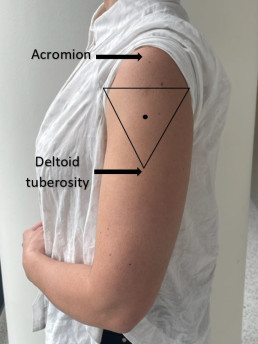
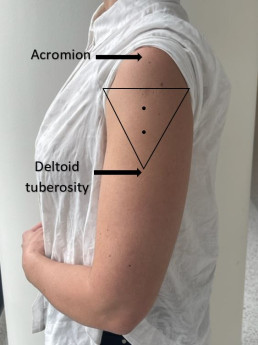
Shoulder Injury Related to Vaccine Administration (SIRVA) is a rare but serious complication following suspected inadvertent administration of a vaccine too high in the deltoid or into the shoulder joint. This may cause a local inflammatory response and potential trauma to local structures within the shoulder joint including bursae, ligaments and tendons resulting in sudden onset shoulder pain and restricted movement. Symptoms can last for weeks to months or as long as years. Affected individuals can experience varying degrees of disability which can impact on their activities of daily living, social and emotional wellbeing. 

Symptoms

Distinguishing symptoms/features of SIRVA include: 

  • sudden onset shoulder pain within 48 hours of vaccination- different to the injection site pain expected following vaccination 
  • restricted range of movement (RROM) of affected shoulder 
  • persistent shoulder pain and RROM lasting >1 week, lasting weeks to months 
  • suspicion of incorrect vaccination site – too high in the upper arm. 

Impacts and implications

The impacts of SIRVA can include: 

  • interrupted sleep due to pain  
  • difficulty with personal care, care of others and activities of daily living 
  • inability to participate in sports or hobbies  
  • modified work duties 
  • time off work related to symptoms and/or treatments and investigations 
  • एलoss of income due to time off work  
  • financial burden due to cost of treatments and investigations  
  • emotional and social wellbeing. 

Further implications for an individual with SIRVA can include vaccine hesitancy, reduced confidence in healthcare/immunisation providers and the potential for impaired immunogenicity.

Diagnosis 

A GP, specialist or allied health professional such as a physiotherapist can diagnose SIRVA based on presenting symptoms and clinical history following an immunisation. 

If radiological investigations such as ultrasound or MRI are undertaken to support or confirm a diagnosis, abnormalities including bursitis, adhesive capsulitis, impingement syndrome, synovitis or tendon tears may be identified.  

Early diagnosis of SIRVA leads to timely treatment which is thought to lessen the duration and severity of symptoms.  

Treatment options

SIRVA can be treated in a variety of ways and may include any of the following: 

  • over the counter pain/anti-inflammatory medications 
  • prescription pain/anti-inflammatory medication 
  • oral corticosteroids 
  • corticosteroid joint injections 
  • physiotherapy or other allied health professionals  
  • massage
  • surgery(rare). 

How to prevent SIRVA

SIRVA can be prevented by following the recommendeडी vaccination procedureएस for correct injection technique. 

WordPress Tables Plugin

कृपया देखें एमवीईसी: इंजेक्शन वाले टीकों का प्रशासन- सही तकनीक for further information on correct injection technique.

Where to report a case of SIRVA

All confirmed or suspected cases of SIRVA should be reported to सैफविक (the Victorian vaccine safety service). Reports can be made by consumers, immunisation providers or treating healthcare professionals. 

SAEFVIC can provide clinical advice or facilitate consultation with an immunisation specialist if required. 

संसाधन

लेखक: Mel Addison (SAEFVIC Research Nurse, Murdoch Children’s Research Institute), Rachael McGuire (SAEFVIC Research Nurse, Murdoch Children’s Research Institute), Georgie Lewis (SAEFVIC Clinical Manager, Murdoch Children’s Research Institute) and Nigel Crawford (Director SAEFVIC, Murdoch Children’s Research Institute)

द्वारा समीक्षित: Mel Addison (SAEFVIC Research Nurse, Murdoch Children’s Research Institute)

तारीख: मार्च 23, 2023

नई जानकारी और टीके उपलब्ध होते ही इस अनुभाग की सामग्रियों को अद्यतन किया जाता है। मेलबर्न वैक्सीन एजुकेशन सेंटर (MVEC) कर्मचारी सटीकता के लिए नियमित रूप से सामग्रियों की समीक्षा करते हैं।

आपको इस साइट की जानकारी को अपने व्यक्तिगत स्वास्थ्य या अपने परिवार के व्यक्तिगत स्वास्थ्य के लिए विशिष्ट, पेशेवर चिकित्सा सलाह नहीं मानना चाहिए। टीकाकरण, दवाओं और अन्य उपचारों के बारे में निर्णय सहित चिकित्सा संबंधी चिंताओं के लिए, आपको हमेशा एक स्वास्थ्य देखभाल पेशेवर से परामर्श लेना चाहिए।


ठोस अंग प्रत्यारोपण प्राप्तकर्ता: पूर्व-प्रत्यारोपण टीकाकरण सिफारिशें

पृष्ठभूमि

Solid organ transplant (SOT) can be a treatment option के लिए एक individual whose own organ/एस are not functioning adequately. ‘Solमैंडीreferएस to transplants of organs such as liver, lung, heart या kidney, as opposed to stem cell or other tissue. Between 2009 and 2024, 19,469 people in Australia received a donated organ. Rejection of a donated organ is a significant and ongoing concern for transplant recipients. Rejection occurs when the recipient’s immune system identifies the transplanted organ as foreign, so trieएस to destroy iटी. To avoid rejection, transplant recipients remain on lifelong immunosuppressive medication, leaving them immunocompromised.

Vaccination is particularly important for those who are immunocompromised, due to the increased risk of developing severe disease (which can lead to hospitalisation, intensive care admission or death) if exposed to vaccine-preventable diseases. In people who are immunocompromised, protection gained from टीका can be suboptimal as the body is not as easily able to mount a response. There can also be a loss of protection gained from अतीत

or infections. Conversely, some vaccines (live-attenuated vaccines) may be contraindicated due to the potential risk of vaccine-related disease.

Recommendations

Serology and screening

With the exception of हेपेटाइटिस बी, MVEC does not routinely recommend serological testing for vaccine-preventable diseases as a measure of seroconversion. Instead, children < 18 years of age requiring a SOT are recommended additional doses of vaccines to ensure adequate protection.

As part of transplant work-up, tuberculosis screening is recommended for children identified as at-risk for infection (latent or active). Children aged < 5 years should undergo tuberculin skin testing (TST), children 5 years of age should have Interferon Gamma Release Assay (IGRA) performed. The identified risk factors include:

  • previous overseas travel to countries with high prevalence of TB
  • known contact with tuberculosis
  • being born in, or having a close family member/household contact born in, a TB-endemic country
  • children living in remote Aboriginal or Torres Strait Islander communities.

Vaccination timing and schedule

To overcome the challenges with mounting an effective immune response, it is recommended that SOT recipients receive National Immunisation Program (NIP)

और additional vaccines well before transplant. Planning for this should occur at diagnosis and/or consideration of transplant. Where a child is overdue routine vaccines, they should be caught up as soon as possible. Any live-attenuated vaccines must be administered a minimum of 4 weeks prior to transplant (these will be contraindicated once immune-suppressed post-transplant). 

The following paediatric guidance has been prepared by vaccine experts, immunologists, paediatricians, infections disease physicians and nurse immunisation specialists from MVEC, the Royal Children’s Hospital and Monash Health.

Table 1: Pre-solid organ transplant recipient (SOTR) paediatric immunisation guideline (September 2025)

WordPress Tables Plugin

* Where a course of Bexsero begins between 6 weeks to ≤ 12 months old, 3 doses are required (minimum 8 weeks between 1st and 2nd doses; 3rd dose at ≥ 12 months/more than 8 weeks after the 2nd dose, whichever is later); When a course of Bexsero commences from 12 months old, 2 doses (minimum 8 weeks apart) are required.
^ Prophylactic paracetamol is recommended to those < 4 years old due to the increased likelihood of the child experiencing fever following vaccination.
# Before having 6-month vaccines, patient must be ≥ 24 weeks of age, and it must be ≥ 8 weeks post 4-month immunisations.
Ω Influenza vaccination is recommended annually from 6 months of age.
β Indicates live-attenuated vaccine. Injected live-attenuated vaccines such as varicella and measles-mumps-rubella (MMR) must be given on the same day (co-administered) or a minimum of 4 weeks apart. They are contraindicated post-transplant.
§ The combination MMRV vaccine (Priorix-Tetra) must not be given as the first dose of measles-containing vaccine in children under 4 years of age due to the risk of febrile seizures, but can be used for the subsequent doses.
∞ A
lternate brands may be used if commencing a course of hepatitis A vaccines in children aged ≥ 2 years.

Considerations

घरेलू संपर्क

Family members and other household contacts should ensure they are up to date with all recommended vaccines, including

, पर्टुसिस,, COVID-19 and live-attenuated vaccines (MMR और वैरीसेला). 

Vaccine access

Some of the recommendations in this reference are outside the scope of the NIP. Different jurisdictions and individual hospitals have varying approaches to non-NIP vaccines, which should be clarified with the local health service. 

लेखक: Nigel Crawford (Director, SAEFVIC, Murdoch Children’s Research Institute) and Rachael McGuire (SAEFVIC Research Nurse, Murdoch Children’s Research Institute)

द्वारा समीक्षित: Nigel Crawford (Director, SAEFVIC, Murdoch Children’s Research Institute), Sharon Choo (Paediatric Allergist, Immunologist & Immunopathologist, Royal Children’s Hospital) and Rachael McGuire (MVEC Education Nurse Coordinator)

तारीख: September 2025

नई जानकारी और टीके उपलब्ध होते ही इस अनुभाग की सामग्रियों को अद्यतन किया जाता है। मेलबर्न वैक्सीन एजुकेशन सेंटर (MVEC) कर्मचारी सटीकता के लिए नियमित रूप से सामग्रियों की समीक्षा करते हैं।

आपको इस साइट में प्रदान की गई जानकारी को अपने व्यक्तिगत स्वास्थ्य या अपने परिवार के व्यक्तिगत स्वास्थ्य के लिए विशिष्ट, पेशेवर चिकित्सीय सलाह नहीं मानना चाहिए। चिकित्सीय संबंधी चिंताओं के लिए जिसमें टीकाकरण, दवाओं और अन्य उपचारों के बारे में निर्णय लेना शामिल है, आपको हमेशा स्वास्थ्य देखभाल पेशेवर से परामर्श लेना चाहिए।


एमवीईसी के बारे में

मेलबोर्न वैक्सीन एजुकेशन सेंटर (एमवीईसी) एक शैक्षिक वेबसाइट है, जिसे स्वास्थ्य सेवा पेशेवरों और जनता के सदस्यों दोनों के लिए अद्यतित टीकाकरण जानकारी प्रदान करने के उद्देश्य से विकसित किया गया है। हम मर्डोक चिल्ड्रन्स रिसर्च इंस्टीट्यूट (MCRI), एक शोध संगठन पर आधारित हैं, और SAEFVIC (समुदाय में टीकाकरण के बाद प्रतिकूल घटनाओं की निगरानी), विक्टोरियन वैक्सीन सुरक्षा सेवा से संबद्ध हैं।