
WHO: Myth-busters: debunking long COVID myths and misconceptions
The World Health Organization (WHO) has developed 8 myth-busters and accompanying resources to counter misinformation about long COVID.
Share campaign materials to help debunk myths and misconceptions. Read more and access materials at WHO: Myth-busters: debunking long COVID myths and misconceptions.
Read more about COVID-19 disease at MVEC: COVID-19.
WHO webinar: Real-World Evidence on RSV Vaccines and Monoclonal Antibodies: Effectiveness, Surveillance, and Early Implementation Insights
This upcoming World Health Organization webinar will share early real-world evidence on RSV prevention product effectiveness, genomic surveillance findings on breakthrough infections, and key programmatic lessons from early adopting countries.
Date: 25 February 2026
Time: 9:00–10:30 am (CET) (7:00–8:30 pm AEDT)
Learn more about RSV disease, transmission, epidemiology and prevention at MVEC: RSV
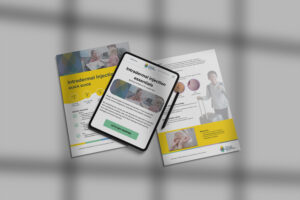
Intradermal injection essentials: New eLearning available now
We are excited to share that MVEC’s latest eLearning package is now available!
Regardless of your experience, the Intradermal injection essentials eLearning provides healthcare professionals with the foundation knowledge needed when administering intradermal injections.
To get started, you will need to be an Education Portal member. Members receive exclusive access not only to our suite of eLearnings but also to past webinar recordings and special ticket prices for face-to-face MVEC events.
If you’re not already a member, become one now through your new or existing Education Portal profile.
This course was made possible through the 2025 GSK Immunisation Award, presented to MVEC at the Public Health Association of Australia’s (PHAA) Communicable Diseases and Immunisation Conference in 2025. MVEC has complete control over the content, and is independent of GSK and PHAA.
MVEC education on social media
MVEC shares evidence-based vaccine education on social media. This up-to-date material provides accessible information for healthcare professionals and the general public alike, and can be used as an education tool.
Support MVEC by following us on Instagram and sharing reliable vaccine content on social media.
NCIRS: Influenza vaccines – FAQs
The National Centre for Immunisation Research and Surveillance (NCIRS) recently updated its Influenza vaccines FAQs page to include a new section with answers to common question about the intranasal flu vaccine FluMist.
Visit the NCIRS Influenza vaccines – FAQs page.
For more information about influenza disease, transmission and protection, visit MVEC: Influenza.
A reminder about diluents and vaccine safety
Vaccine errors, relating to the way a vaccine is stored, prepared or administered, are a type of adverse event following immunisation (AEFI). Diluent-related errors occur when only the diluent of a vaccine requiring reconstitution is administered, or the incorrect diluent is used to reconstitute a vaccine manufactured in a powered or pellet form.
In general, where only a diluent has been administered, the vaccine should be repeated ideally on the same day or as soon as possible.
The diluent supplied with Infanrix hexa contains the DTPa-hepB-IPV (diphtheria-tetanus-acellular pertussis, hepatitis B, inactivated poliovirus) components as liquid in a syringe. If only the Infanrix hexa diluent is administered, the vaccinee will not receive the Hib (haemophilus influenzae type B) component of the vaccine. In this instance, a dose of ActHIB should be given either at the same time or as soon as the error is realised. This will provide protection against Hib without increasing the chance of vaccine reactions due to the additional dose of other antigens if Infanrix hexa were repeated.
If doses are packaged in multipacks, there is an added complication of identifying which individuals have been impacted by a diluent error. In the case of a discrepancy in diluent–antigen count in a multipack, it is difficult to narrow down which individuals are impacted.
Any adverse event following immunisation (AEFI), including diluent errors, should be reported to the adverse event reporting service in your jurisdiction.
MVEC: Open disclosure
MVEC: Multidose vials
Education Portal: Use of multidose vials eLearning
MVEC: Herpes zoster (shingles)
Strengthening AEFI Causality Assessment in Lao PDR
MVEC Director Prof Nigel Crawford and Education Nurse Coordinator Rachael McGuire, recently travelled to Lao PDR in support of vaccine safety.
Delivering a workshop funded by WHO Lao PDR Country Office, Gavi, the Vaccine Alliance and the Australian Government through the Partnerships for a Healthy Region initiative, they were joined by colleagues Prof Kristine Macartney (NCIRS), Bernice Sarpong (NCIRS), and Prof Julie Leask (University of Sydney). Over 3 days, members of the National Immunisation Technical Advisory Group (NITAG), Laos AEFI committee, clinicians and specialists explored management and reporting of adverse events, adverse event case definitions, causality assessments, and adverse event communication. At the conclusion of the teaching, it was exciting to see our Laos counterparts set themselves goals to work towards that will strengthen the country’s immunisation safety practices in the future.
Following the workshop, Nigel and Rachael were invited to visit Mahasot Hospital, Vientiane, and the Children’s Hospital, Vientiane. Observing in-country immunisation practice and capacity, and understanding the challenges of the current systems proved invaluable for identifying ways to increase both immunisation coverage and trust in vaccines. MCRI and MVEC continue to support vaccine safety in Laos into 2027 with support from the Australian Government.
Statement on autism and vaccines
MVEC strongly disagrees with the changes to messaging recently published on the United States’ Centers for Disease Control and Prevention (CDC) web page ‘Autism and Vaccines’.
For a vaccine to be administered in Australia, it must adhere to the strict requirements of the Therapeutic Goods Administration (TGA) and have supportive evidence to satisfy the Australian Technical Advisory Group on Immunisation (ATAGI). Australian health authorities involved in vaccine policy and decision‑making are independent of political agenda, influence and financial gain. Transparency and appropriate management of conflicts of interest are integral to maintaining the high standards required to fulfil this responsibility.
Australia has robust vaccine safety monitoring systems that include both active and passive adverse event reporting, and signal detection and investigation. Safety surveillance continues after vaccines are approved and rolled out to a population. There are no safety signals relating to any vaccine (including MMR which protects against measles, mumps and rubella) or vaccine ingredient (including aluminium) causing autism.
CDC’s recent change to messaging asserts that the statement “vaccines do not cause autism” is not evidence‑based. However, this ignores scientific methodology, whereby researchers seek evidence for a particular event happening – i.e. vaccines causing autism – rather trying to prove that an event can never happen. Dozens of studies involving millions of children have found no link between vaccines and autism. These studies are evidence that vaccines do not cause autism.
Spreading vaccine misinformation and disinformation threatens trust not only in vaccines but also in the processes in place to ensure our safety.
Vaccines have saved 6 lives every minute since 1974. 154 million deaths have been prevented in the last 50 years. The vaccines used in Australia are safe and effective.
Resources
- MVEC: Autism and immunisation
- MVEC: Development and registration of vaccines
- TGA: Reaffirming the safety of Australia's vaccines (November 2025)
- CDC: Global Measles Outbreaks
- Australian Health Protection Committee (AHPC): Statement on measles (May 2025)
- Children’s Hospital of Philadelphia: Vaccines and Autism
- SKAI: What about autism?
- Department of Health, Disability and Ageing: Immunisation
Survey: Understanding how non-scheduled and additional vaccines are administered in practice
MVEC has developed a survey to better understand experiences and practices around the administration of non-scheduled or additional vaccines.
Help inform immunisation-related education by completing this brief survey (up to 5 minutes).
Recording available now for members: CVU mini pneumococcal update (webinar)
A recording of last week’s CVU mini webinar is now available for Education Portal members.
Featuring Prof Nigel Crawford, Ms Rachael McGuire and Dr Linny Kimly Phuong, hear the latest on pneumococcal vaccination in line with the 1 September 2025 changes to the childhood pneumococcal vaccine schedule, followed by a brief Q&A session.
By becoming an Education Portal member, you not only support MVEC, but you get exclusive access to:
- past webinar recordings
- eLearnings
- special ticket prices for face-to-face MVEC events.
If you’re not already a member, why not become one now?