

Updated immunisation reference page: Injection site nodules
Injection site nodules (ISNs) are a rare adverse event following immunisation (AEFI). Nodules can occur following the administration of an injected vaccine. They are most often asymptomatic, but may be intermittently tender, itchy, or show overlying skin changes. They generally resolve on their own without intervention.
We have recently updated our ISN reference page. The updated page includes information on ISN diagnosis, possible causes, and treatment, and recommendations for future vaccine doses.
Updated immunisation reference page: Aboriginal and Torres Strait Islander peoples immunisation recommendations
Aboriginal and Torres Strait Islander peoples, or First Nations Australians, have higher rates of some vaccine‑preventable diseases compared to non‑Indigenous Australians. First Nations Australians are prioritised for additional protection through the funding of additional vaccines on the National Immunisation Program (NIP).
We have recently updated our reference page on immunisation recommendations for Aboriginal and Torres Strait Islander peoples. The newly updated page includes:
- a comprehensive table of funded vaccines available in each state
- information about vaccine‑preventable diseases targeted through funding
- information about vaccine access
- links to helpful resources.
微血管内皮细胞: Aboriginal and Torres Strait Islander people immunisation recommendations
更新免疫参考页:免疫抑制和疫苗
Individuals who are immunocompromised have a weakened immune system, resulting in a decreased ability to fight infections. Immunocompromise can be caused by many different factors such as certain medical conditions, being a transplant recipient, advancing age or taking medications that suppress the immune system.
Vaccination is particularly important for those who are immunocompromised, due to the increased risk of developing severe disease if exposed to vaccine-preventable diseases.
We have recently reviewed our reference page on immunocompromise/immunosuppression and vaccines. The page includes up-to-date information on vaccine timing, contraindicated vaccines and safe alternatives, what to do in the event of inadvertent administration of a live-attenuated vaccines, and advice for household contacts of immunocompromised people.
Updated immunisation reference page: Injection site reactions
Injection site reactions (ISRs) are a common localised side effect that can occur following the administration of any injected vaccine.
We have recently updated our injection site reaction reference page to provide more information on the diagnosis of ISRs, to detail factors associated with a higher incidence of ISRs and to clarify the proper treatment of ISRs.
ISRs resolve on their own without intervention. They can be managed at home with symptomatic relief. ISRs are not a sign of allergy or local infection. Therefore antihistamines, steroids or antibiotics are not required.
New immunisation reference page: DiGeorge syndrome and vaccines
DiGeorge syndrome (also known as velocardiofacial syndrome or 22q11.2 deletion syndrome) is a genetic condition that affects approximately 1 in 2,000 newborns.
The implications of DiGeorge syndrome vary between individuals. It is commonly associated with immunocompromise, making vaccination particularly important to provide protection against vaccine-preventable diseases.
MVEC has recently published a new immunisation reference page on DiGeorge syndrome, including a new guidance developed as a collaboration between MVEC, Queensland Children’s Hospital and Royal Brisbane and Women’s Hospital.
MVEC: DiGeorge syndrome and vaccines
New immunisation reference page: Immunosuppression in pregnancy and infant vaccine recommendations
Immunosuppressive therapies play an important role in the treatment of many medical conditions.
MVEC has recently published a new immunisation reference page on immunosuppression in pregnancy and infant vaccine recommendations. The page includes a new guidance, developed as a collaboration between MVEC, Queensland Children’s Hospital and Royal Brisbane and Women’s Hospital.
MVEC: Immunosuppression in pregnancy and infant vaccine recommendations
Translated versions of immunisation reference pages: Influenza and Tuberculosis (BCG)
We are excited to let you know that we are now offering translated versions of a couple of our most popular immunisation reference pages.
Our tuberculosis/BCG reference pages are both available to read in Hindi, Simplified Chinese, and Vietnamese.
These two reference pages include information on disease symptoms, epidemiology, transmission and vaccine recommendations.
The pages are available via the banner on our homepage, links at the top of our A–Z reference page or by selecting the preferred language from a drop-down box on the reference page itself (MVEC:流感 MVEC: Tuberculosis/BCG).
The MVEC newsletter returns in 2024
MVEC’s fortnightly newsletter will return from the beginning of February 2024.
Stay tuned in case of any updates regarding our next 免疫技能研讨会. The workshop will be held early next year. If there are any updates between now and February, subscribers will receive an update via email.
You can also stay tuned via our Instagram的 页。
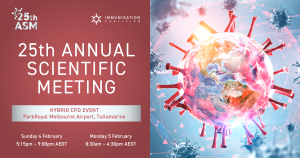
Immunisation Coalition: 25th Annual Scientific Meeting
这 Immunisation Coalition will hold its 25日 Annual Scientific Meeting from 4 to 5 February 2024.
The meeting will be held in Melbourne and online, and will be chaired by A/Prof Lou Irving from the Royal Melbourne Hospital.
Find out more and register on the Immunisation Coalition's Annual Scientific Meeting event page.
MMWR: Progress in Immunization Safety Monitoring
A recent report shows that national AEFI (adverse event following immunisation) surveillance systems increasingly support the timely sharing of immunisation safety data, including individual case-based reports. When shared globally, individual case safety reports contribute to the description of trends and regional characteristics of AEFIs.
But work is still needed to strengthen global vaccine safety monitoring, and to promote public confidence in national vaccine programs.
MMWR: Progress in Immunization Safety Monitoring